🔥 Featured Dishes
The Dish That Smells Like Home
Ask anyone in Doha what the taste of Qatar is, and the answer arrives before the question finishes: machboos (مكبوس), sometimes written majboos or kabsa in neighbouring Gulf states. It is a one-pot spiced rice — long-grain basmati cooked in a deeply seasoned broth, layered with meat or seafood, and crowned with caramelised onions and fried nuts. The word itself comes from the Arabic root meaning “to press” or “to pack down,” a nod to the way the rice and its juices are gently compacted together in the pot.
Machboos is not a restaurant invention or a tourist showpiece. It is the dish a Qatari grandmother makes on a Friday, the platter set on the floor of a majlis when guests arrive, the smell of loomi (dried lime) and cinnamon drifting from a kitchen at dusk during Ramadan. To understand machboos is to understand how Qatar eats — communally, generously, and with an aromatic patience that comes from a desert culture where a single well-spiced pot once had to feed a whole household.
This guide walks through where machboos came from, how the rice method actually works, the four meats and seafood that define its varieties, the two ingredients that make it unmistakably Gulf — loomi and baharat — and what a plate of it means for your day in calories.
A Short History: Trade Winds, Rice & the Pearl Coast
Machboos belongs to a wider family of Arabian spiced-rice dishes that stretch across the Gulf — Saudi kabsa, Emirati and Bahraini machboos, Kuwaiti majboos. They share a common ancestry shaped by centuries of maritime trade. Qatar sits on the sea routes that once carried rice from the Indian subcontinent, spices from Zanzibar and Malabar, and dried limes from Persia. Pearl-diving crews and merchant dhows brought those ingredients home, and Qatari cooks folded them into a local style of cooking built around dates, fish, and whatever meat a family could keep.
The genius of machboos is that it is a frugal dish dressed as a feast. Rice stretches a modest amount of meat to feed many; a single fragrant broth carries the flavour of expensive spices through an entire pot. In Bedouin and coastal communities alike, the ability to set a steaming mound of spiced rice before guests was — and remains — a marker of hospitality and standing.
As Qatar grew from a pearling and fishing economy into a modern Gulf state, machboos travelled with it: from clay pots over wood fires to gas ranges and pressure cookers, from the home majlis to the menus of Souq Waqif restaurants. The recipe modernised, but its role at the centre of the table never changed.
The Method: How Spiced Rice Actually Comes Together
Machboos is technically simple and texturally demanding — the reward is in getting the rice right. Every grain should be separate, glossy, and saturated with the flavour of the broth, never mushy. The classic sequence runs like this:
- Build the base (the marag). Onions are softened in oil or ghee until golden, then garlic, ginger, and whole spices — cinnamon stick, cardamom pods, cloves, bay leaf, black lime (loomi) — go in to bloom in the fat.
- Brown the protein. Chicken, lamb, fish or shrimp is seared in that aromatic base so the spices crust onto the meat.
- Make the broth. Chopped tomato, baharat spice blend, turmeric, and a pierced loomi are added with water; the protein simmers until tender, building a rust-coloured, intensely savoury stock.
- Cook the rice in that broth. The meat is lifted out, soaked basmati goes into the seasoned liquid, and the rice absorbs every bit of flavour as it cooks.
- Press & steam (the “machboos” step). The meat is returned on top, the pot is covered tightly, and everything steams together on a low flame so the rice firms up and the flavours marry — this gentle packing-down is what gives the dish its name.
- Finish & garnish. Served mounded on a large platter, topped with the meat, crisp fried onions, toasted almonds or raisins, and often a side of daqoos — a tangy cooked tomato-and-chilli sauce.
Two flourishes separate a great machboos from a good one. The first is loomi, dropped in whole and pierced so its sour, smoky perfume seeps through the broth. The second is a final touch of bzar (the household baharat blend) stirred through at the end for a fresh hit of warm spice. A close cousin worth knowing is madrouba (مدروبة), where the rice is beaten into a soft, porridge-like texture rather than kept fluffy — comfort food at its most literal.
Loomi & Baharat: The Two Souls of the Pot
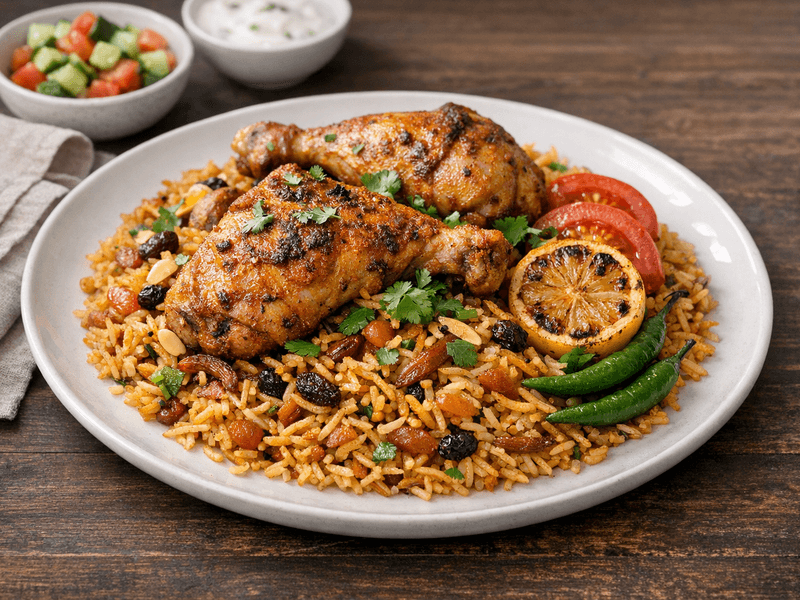
Chicken Machboos
185 kcalqatari
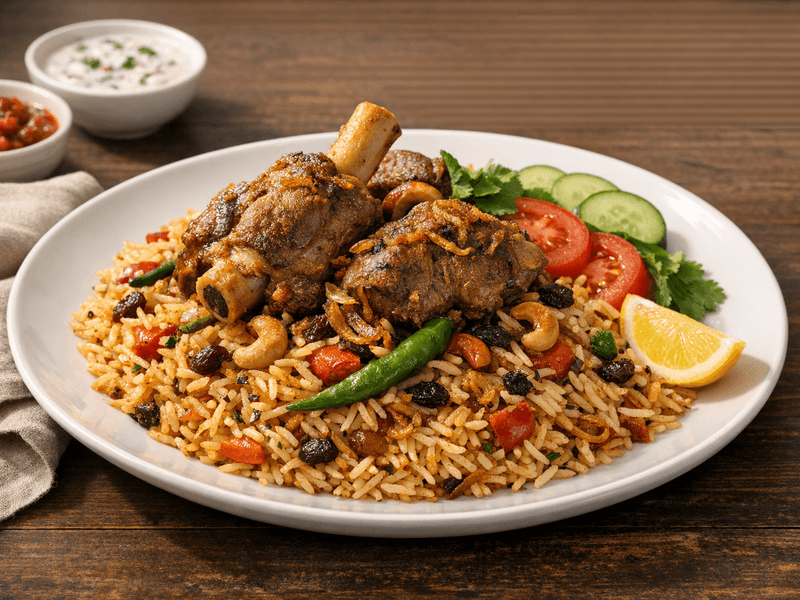
Lamb Machboos
215 kcalqatari
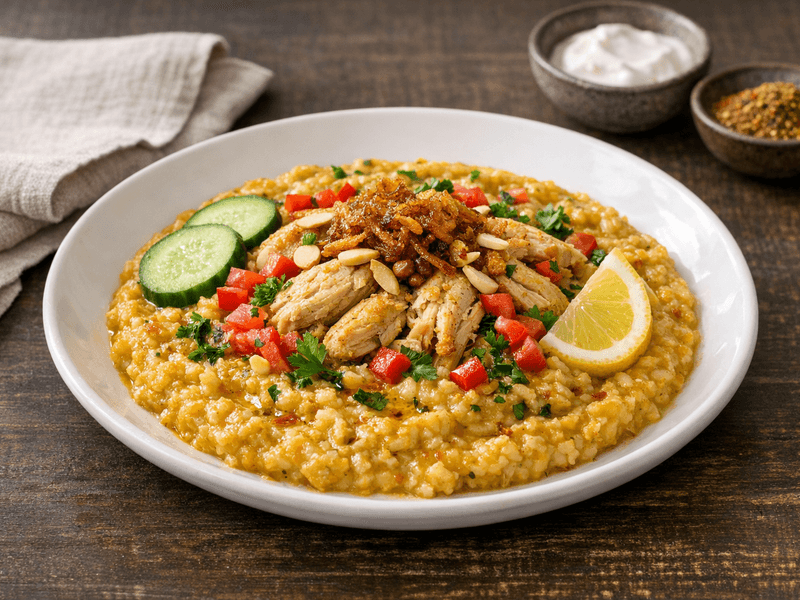
Madrouba Chicken
160 kcalqatari
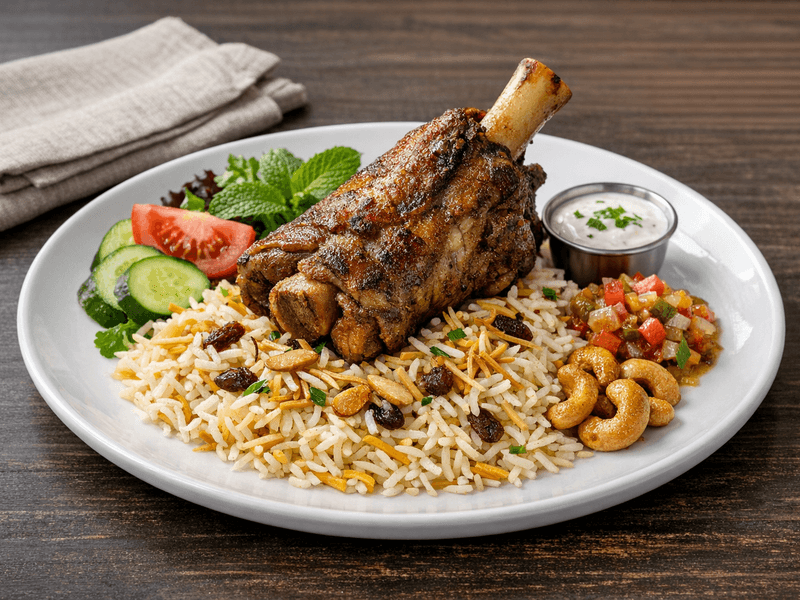
Ghuzi Lamb
230 kcalqatari
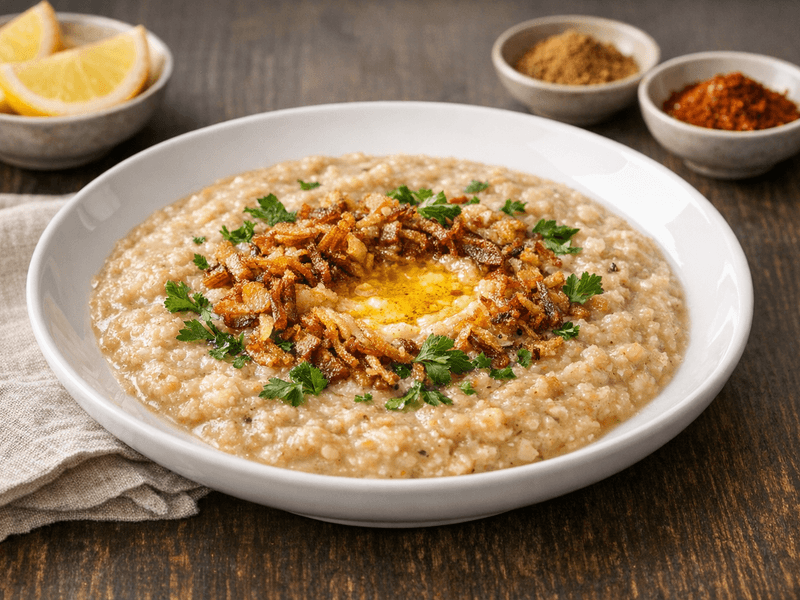
Harees
145 kcalqatari
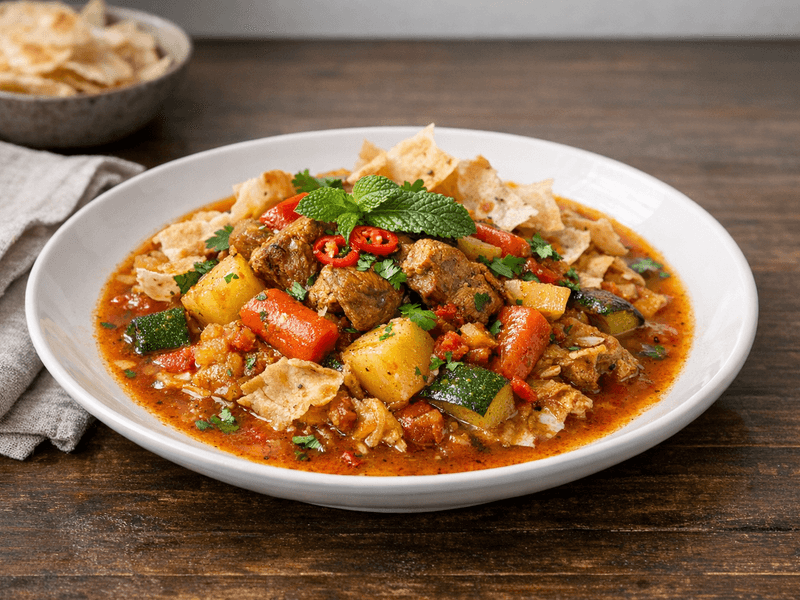
Thareed
155 kcalqatari
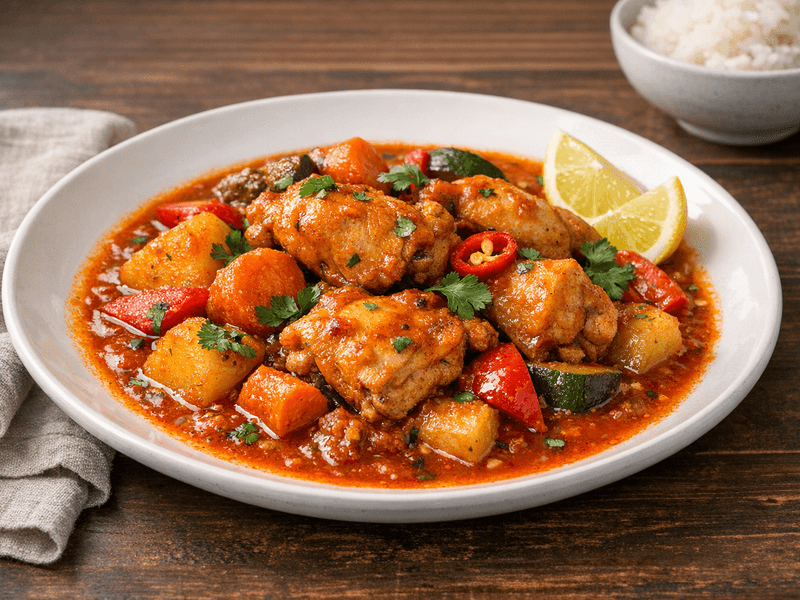
Saloona Chicken
135 kcalqatari
The Varieties: Chicken, Lamb, Fish & Shrimp
Machboos is named for what sits on top of the rice. The four classic versions each have their own character and occasion:
- Machboos Dajaj — chicken (دجاج). The everyday favourite and the version most newcomers meet first. Quicker to cook, lighter than the lamb, and endlessly forgiving. This is the weeknight and welcome-the-guests default. See Chicken Machboos.
- Machboos Laham — lamb or mutton (لحم). The celebration version. Bone-in lamb simmered long and slow lends the broth — and therefore the rice — a richness that chicken cannot match. This is the platter for Eid, weddings, and honouring an important visitor. See Lamb Machboos.
- Machboos Samak — fish, usually hammour (سمك). A direct nod to Qatar’s pearl-coast and fishing heritage. Hammour (grouper) is the prized choice — firm, mild, and meaty enough to hold up in the spiced broth. A reminder that before the gas boom, the sea fed Qatar.
- Machboos Rubyan — shrimp (روبيان). Coastal and quick-cooking, rubyan machboos turns the local Gulf prawn into something fragrant and special. Because shrimp cooks fast, the broth is built first and the rubyan added near the end so it stays tender.
Beyond the protein, you will also hear of machboos made with the household’s preferred rice length, with or without saffron, and with regional tweaks to the spice ratio. There is no single “correct” machboos — there is your family’s machboos, which is, of course, the best one.
How Machboos Is Served at a Gathering
Machboos is built for company. At a traditional Qatari gathering it arrives not in individual bowls but as a single towering platter — rice mounded high, the meat arranged on top, scattered with golden onions and nuts — placed at the centre of the spread, often on a cloth on the floor of the majlis. Guests gather around it and eat together, traditionally with the right hand, scooping rice and tearing meat directly from the shared dish.
The ritual around it matters as much as the food. A meal usually opens with gahwa (Arabic coffee) and dates, the machboos anchors the main, and bowls of fattoush or fresh salad, yoghurt, and the chilli daqoos sit alongside. Sweets such as luqaimat and another round of coffee close the gathering. During Ramadan, machboos is one of the great iftar centrepieces; during Eid and weddings, the lamb version on a vast platter is a statement of welcome and abundance.
To be offered machboos in a Qatari home is to be honoured — refusing a second helping too quickly can read as a mild slight, because feeding a guest generously is the whole point. Eat slowly, accept the coffee, and compliment the loomi.
Roughly How Many Calories Are in a Serving?
Machboos is rice-and-meat comfort food, so portions are generous and so are the numbers — especially because the rice is cooked in a fat-rich, broth-soaked base. The figures below are rough estimates for a typical home-style serving (about a cup-and-a-half of rice plus a piece of meat); a heaped festive platter portion can run well above these.
| Variety | Calories (per serving) | Notes |
|---|---|---|
| Chicken Machboos (Dajaj) | ~600–750 | Skin-on chicken adds fat |
| Lamb Machboos (Laham) | ~700–900 | Richest of the four |
| Fish Machboos (Hammour) | ~550–700 | Leaner protein |
| Shrimp Machboos (Rubyan) | ~500–650 | Lightest, low-fat protein |
*Approximate values for a standard home serving. Restaurant and festive-platter portions are larger; fried-onion and nut garnishes, ghee-rich versions, and a side of daqoos or laban add more.
A few practical ways to enjoy machboos without overshooting your day:
- Pick the protein for your goal — fish or shrimp machboos lands lighter than lamb while still being authentic.
- Mind the rice mound — the broth-cooked rice is where most calories live; one serving instead of two refills is the easy win.
- Load the salad side — fattoush, tabbouleh, and fresh cucumber-tomato add volume and freshness for very little.
- Track the real plate, not a guess — log your machboos in QatarCalorie by snapping a photo, and we will estimate the rice, meat, and garnish for you.
Frequently Asked Questions
What is Qatar's national dish?
What is the difference between machboos and biryani?
What is loomi and why is it used in machboos?
What is baharat in Qatari cooking?
What kinds of machboos are there?
How many calories are in a serving of machboos?
How is machboos traditionally served and eaten?
Is machboos the same as kabsa or majboos?
More Articles
Traditional Qatari Cuisine: The Dishes That Define Qatar
A complete guide to traditional Qatari food — machboos, harees, thareed, madrooba, balaleet, ghuzi and saloona — and the Bedouin, Gulf and pearl-diving roots that shaped it, from loomi and baharat to the modern Doha table.
guideGahwa & Dates: The Heart of Qatari Hospitality
Arabic coffee and dates are the first thing a Qatari host offers — and the last thing you should refuse. A guide to gahwa, the dallah and finjan, cardamom and saffron, the pour-and-shake ritual, and the majlis welcome.
guideThe Qatari Majlis: Food, Generosity & Dining Etiquette
Inside the majlis مجلس — the heart of Qatari hospitality. How communal floor dining works, why you eat with your right hand, the ritual of gahwa and dates, and the unwritten rules for honouring a guest in Qatar.