🔥 Featured Dishes
What Defines Qatari Cuisine
Qatari cuisine (المطبخ القطري) is the food of a small Gulf peninsula that, for most of its history, lived between the desert and the sea. Before oil and gas reshaped the country in the second half of the twentieth century, life in Qatar revolved around three things: the Bedouin caravan, the date palm, and the pearl-diving dhow. Every signature dish on the Qatari table still carries the fingerprint of at least one of them.
At its heart, Qatari food is aromatic rather than fiery. The defining flavour is warmth and depth, not heat — slow-cooked grains, fall-apart meat, and rice perfumed with whole spices. Two ingredients do most of the heavy lifting: loomi (لومي, dried black lime) for its sour, almost smoky tang, and baharat (بهارات), the all-purpose Gulf spice blend of black pepper, cumin, coriander, cinnamon, cardamom, cloves and nutmeg.
Because Qatar sits on ancient trade routes, the cuisine is also a quiet record of contact — Persian, Indian, East African and Levantine cooks all left marks on the Gulf kitchen. The result is a food culture that feels deeply rooted yet effortlessly cosmopolitan, which is exactly what you find on a plate in Doha today.
Bedouin, Gulf & Pearl-Diving Roots
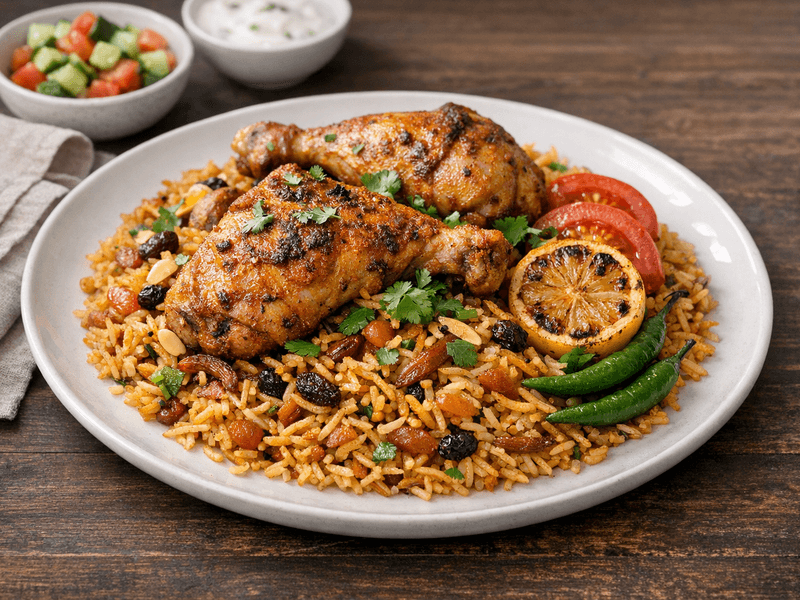
Chicken Machboos
185 kcalqatari
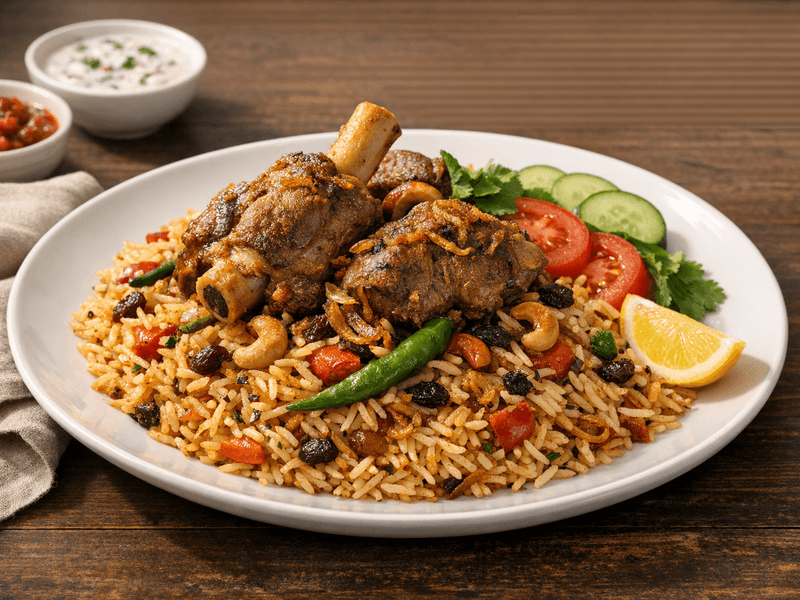
Lamb Machboos
215 kcalqatari
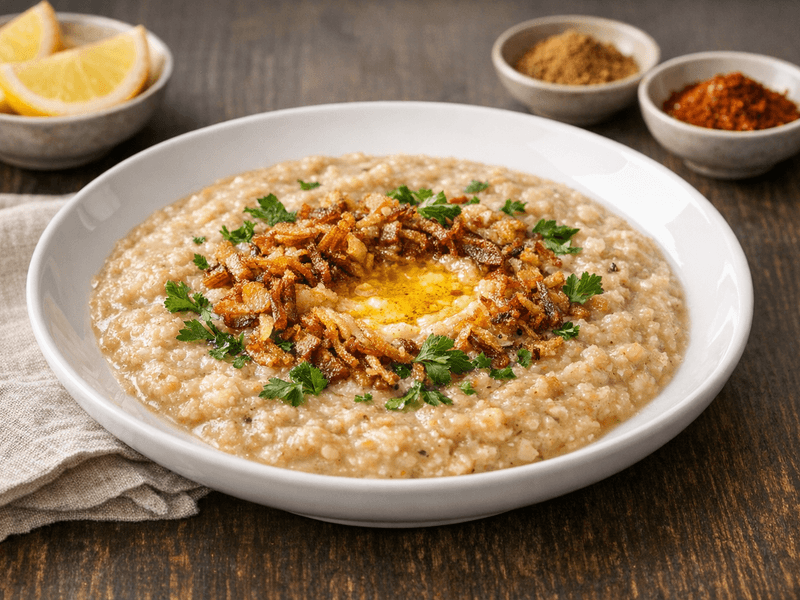
Harees
145 kcalqatari
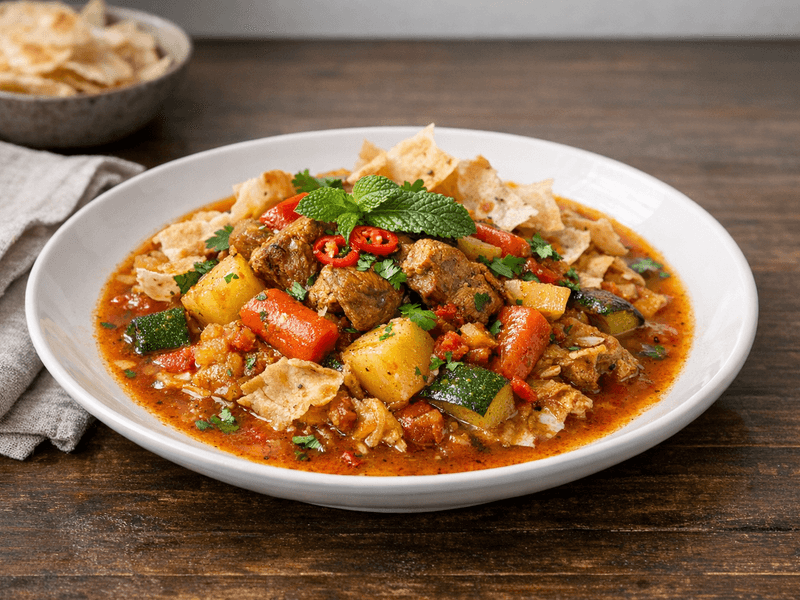
Thareed
155 kcalqatari
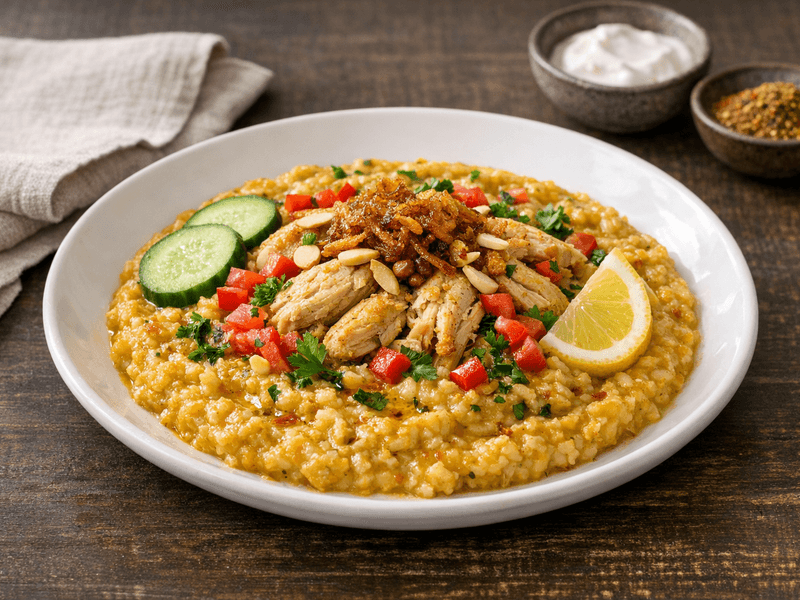
Madrouba Chicken
160 kcalqatari
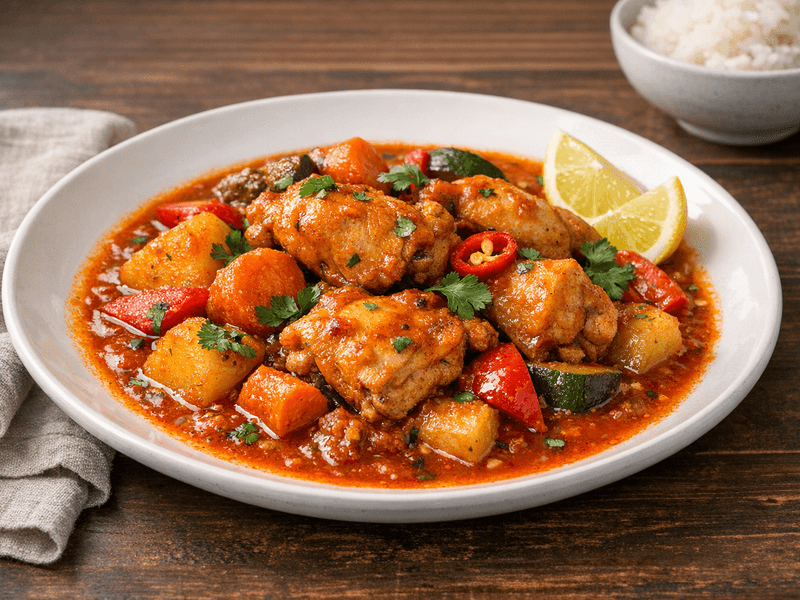
Saloona Chicken
135 kcalqatari
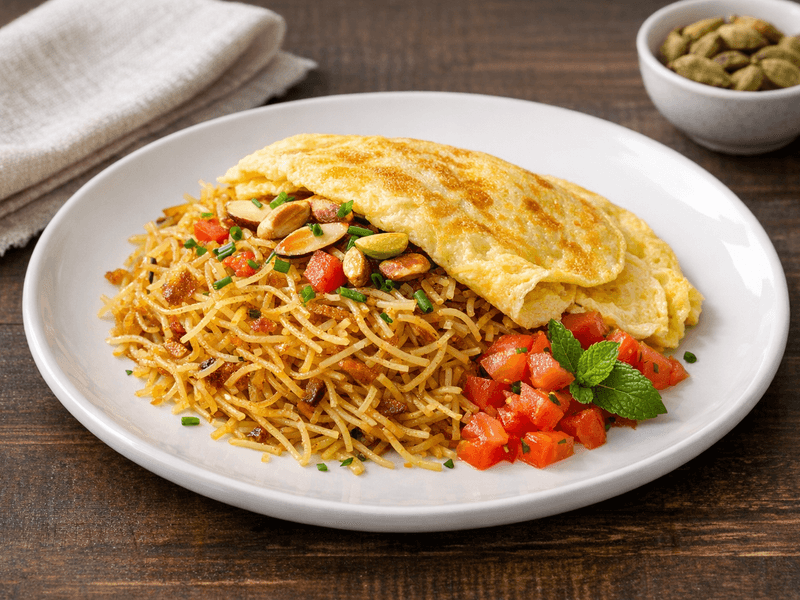
Balaleet
235 kcalqatari
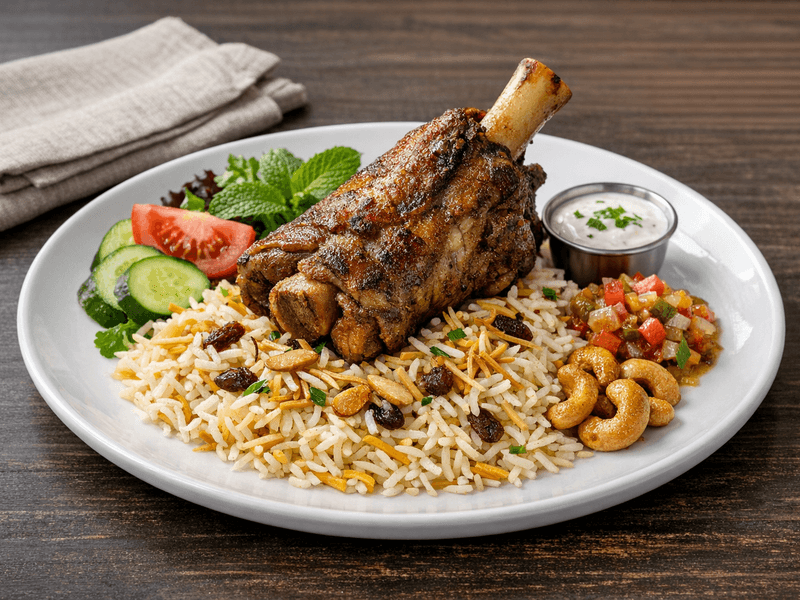
Ghuzi Lamb
230 kcalqatari
The Seven Dishes That Define Qatar
Chicken Machboos
185 kcalqatari
Lamb Machboos
215 kcalqatari
Harees
145 kcalqatari
Thareed
155 kcalqatari
Madrouba Chicken
160 kcalqatari
Saloona Chicken
135 kcalqatari
Balaleet
235 kcalqatari
Ghuzi Lamb
230 kcalqatari
Loomi, Baharat & the Flavours of the Gulf
You cannot fake Qatari flavour without two pantry staples and a small supporting cast. Master these and almost every dish above starts to make sense.
- Loomi (لومي, dried black lime) — limes boiled in brine and sun-dried until hard and dark. Used whole (pierced) or ground, it delivers a sour, fermented, faintly smoky tang that defines machboos, saloona and many stews.
- Baharat (بهارات) — literally "spices". The Gulf blend leans warm and sweet: black pepper, cumin, coriander, cinnamon, cardamom, cloves, nutmeg and paprika. Every family tweaks the ratio.
- Saffron & rosewater — the perfume of celebration rice and sweets, from ghuzi to balaleet to luqaimat.
- Cardamom (hayl) — the soul of Qatari hospitality, crushed into gahwa (Arabic coffee) and karak chai.
- Ghee (samn) — the traditional cooking fat that enriches harees, machboos rice and porridges.
- Dried lemon, turmeric & dried red chilli — for colour and a gentle, building warmth rather than aggressive heat.
The takeaway: Qatari cooking is about layered aromatics and long cooking, not chilli burn. The complexity comes from how the spices bloom over time.
How Qataris Eat: From Majlis to Modern Doha
Food in Qatar is inseparable from hospitality. A guest is welcomed with gahwa and dates in the majlis (the sitting room) before any meal — a ritual so central we devote a whole guide to gahwa and dates and another to majlis etiquette and generosity. Large dishes like ghuzi and machboos are traditionally served on a single communal platter and eaten with the right hand, gathered around as a family or group.
The rhythm of the year matters too. During Ramadan the day flips: the fast is broken at iftar with dates, lentil soup and samboosa, while harees and thareed reappear as nightly comforts. Eid brings out the ghuzi and the sweets.
Modern Doha layers a global food city on top of all this tradition. Walk through Levantine, Indian, Pakistani, Filipino and Turkish kitchens and you are reading the city's expat map in dishes. The restored alleys of Souq Waqif remain the best place to eat the old and the new side by side — see our Souq Waqif food guide — while glossy waterfront districts show where Qatari tradition meets the world.
Whether you are tracking the protein in a plate of chicken mandi or just curious about what makes a bowl of harees so filling, QatarCalorie helps you log every traditional and modern dish on the Qatari table — no judgement, just numbers.
Frequently Asked Questions
What is Qatar's national dish?
What is traditional Qatari food like?
What is loomi and why is it in so many Qatari dishes?
What spices are used in Qatari cooking?
What is the difference between harees, thareed and madrooba?
Is Qatari food spicy?
What do Qataris eat for breakfast?
Where can I try authentic Qatari food in Doha?
More Articles
Machboos: The Story Behind Qatar's National Dish
Machboos (مكبوس) is Qatar's national dish — fragrant spiced rice layered with chicken, lamb, fish or shrimp, scented with loomi and baharat. Here is its history, the method, the varieties, how it anchors a Qatari gathering, and roughly how many calories sit on the plate.
guideSouq Waqif Food Guide: What to Eat in Doha's Old Market
A local's guide to eating at Souq Waqif (سوق واقف) — Doha's restored old market. Where to find authentic Qatari machboos, Levantine mezze, grilled meats, karak chai, and the best street snacks, plus the must-try dishes and practical tips.
guideA Qatari Breakfast: Balaleet, Khubz, Cheese & Chai
What a real Qatari breakfast looks like — sweet saffron balaleet, eggs and cheese, honey, khubz and crisp regag bread, chebab pancakes and warm foul, all washed down with karak and gahwa. A guide to the rituals, dishes and how to eat it.